Plumbing Issues Found in Your Home Inspection: A Calm, Practical Read-Through
Get a calm, practical guide to common plumbing issues found during home inspections and learn how to approach them confidently.
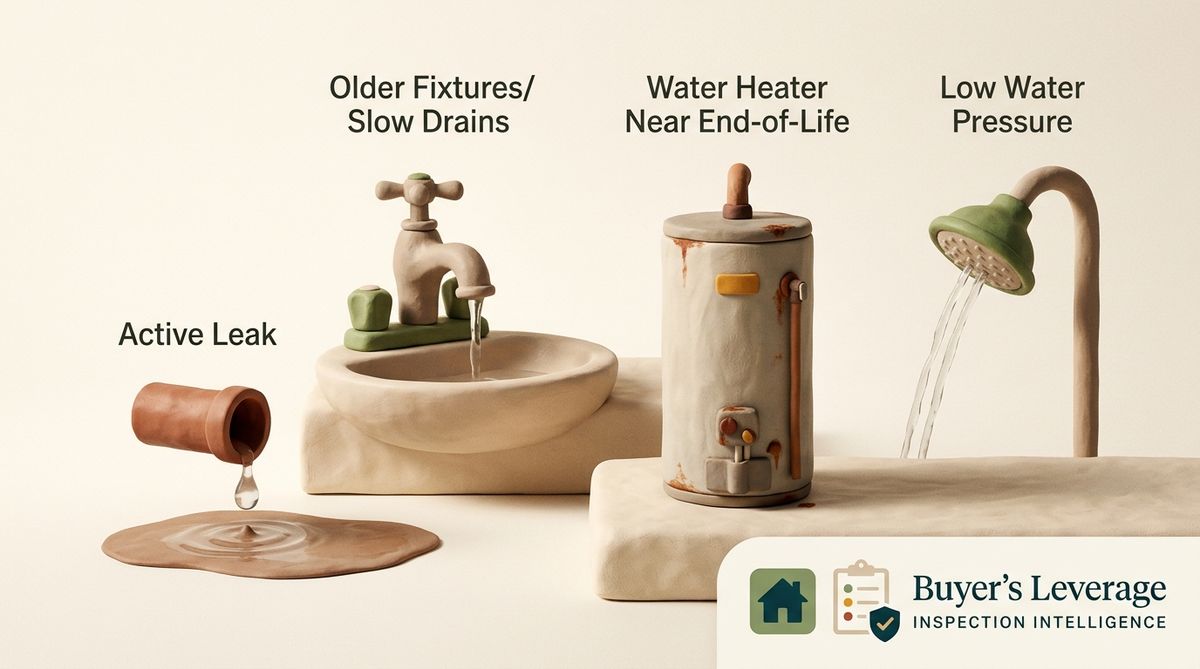
You just got your inspection report, and the plumbing section has notes. Some of them look alarming. Let's walk through the most common plumbing findings—what they mean, what they don't, and how to think about them calmly.
What Plumbing Inspectors Look For (and Why)
Home inspectors check visible plumbing—supply lines, drain pipes, water heaters, fixtures, and water pressure. They're looking for leaks, corrosion, outdated materials, and safety concerns.
They can't see inside walls or under slabs. They run faucets, flush toilets, and check for drips. What they write down isn't often a defect—it's often documentation of age or material type.
The goal is to tell you what's there so you can plan. Some findings need immediate attention. Others are just notes for your future planning.
Polybutylene Supply Lines: The Insurance Question
If your inspector notes polybutylene supply lines (sometimes called 'poly-B' or 'PB pipe'), pay attention. This gray plastic piping was installed in millions of homes from the late 1970s through the mid-1990s. It was cheap and easy to install.
The problem: polybutylene deteriorates when exposed to chlorine and other chemicals in municipal water. It can become brittle and fail without warning, sometimes causing significant water damage.
Many insurance carriers won't write policies on homes with polybutylene, or they'll exclude water-damage coverage. Some will insure it only if you agree to replace it within a set timeframe—often 30 to 90 days.
Replacement typically means repiping the whole house. It's invasive work. This is one of the findings where you'll want to talk with your agent early, get a plumber's estimate, and understand your insurance options before you firm up your offer.
Galvanized Steel Pipe: Why Inspectors Call It Out
Galvanized steel supply pipe was common before the 1960s. It's recognizable by its dull gray color and threaded fittings. Inspectors note it because it corrodes from the inside out.
Over decades, rust and mineral buildup narrow the pipe diameter. You'll see low water pressure, slow drains, or discolored water—especially when you first turn on a faucet in the morning.
Most galvanized pipe has a useful life of about 40 to 70 years, depending on water chemistry. If your house was built in 1950 and still has original galvanized supply lines, you're near or past end-of-life.
Replacement is the same as polybutylene: a whole-house repipe. It's not an emergency today, but it's a planning conversation. Some lenders or insurers may also flag it, though less universally than polybutylene.
Water Heater Age and What 'Typical Lifespan' Really Means
Inspectors often note the age of your water heater. Most tank-style water heaters last 10 to 12 years. Some go 15. A few fail at year 8.
If your report says the water heater is 11 years old, that's not a defect—it's a heads-up. You're in the replacement window. Budget for it in the next year or two.
If the heater is 15+ years old and still working, it's living on borrowed time. That doesn't mean it'll fail tomorrow, but it does mean you should plan for replacement soon after closing.
Water heaters don't give much warning. When they fail, they can leak—sometimes a lot. Knowing the age helps you plan, and it may support a credit discussion if the unit is significantly past typical lifespan.
Slow Drains and What They Signal
If your inspector notes slow drains, it usually means water didn't flow away quickly during testing. Common causes: partial clogs (hair, grease, soap buildup), venting issues, or—in older homes—corroded galvanized drain pipe.
A slow drain in one fixture is often a simple fix. Slow drains throughout the house can point to a bigger issue—main line problems, poor venting, or old cast-iron drains that are corroding inside.
Your inspector can't diagnose the cause without opening walls or running a camera scope. That's why they'll often recommend further evaluation by a licensed plumber.
This is a common 'refer out' item. It's not often expensive, but you want to know what you're dealing with before you own the house.
What 'Recommend Further Evaluation by a Licensed Plumber' Actually Means
This is one of the most common phrases in inspection reports, and it sounds scarier than it often is. It means your inspector saw something they can't fully evaluate with a visual inspection.
It's a handoff. Inspectors are generalists. Plumbers are specialists. The inspector is saying, 'I see a potential issue here—have a plumber take a closer look before you close.'
Sometimes the plumber finds nothing. Sometimes they find a minor fix. Sometimes they confirm a material concern that needs budgeting or negotiation.
Don't skip this step. It's your chance to get a professional assessment and a repair estimate while you still have negotiation leverage. Your agent can coordinate it, and you'll typically pay for the plumber visit out of pocket—it's worth it.
Leaks: Active vs. Evidence Of
Inspectors distinguish between active leaks (water is dripping right now) and evidence of past leaks (stains, corrosion, or water marks).
An active leak is a current defect. It needs repair, and it's reasonable to ask the seller to address it or provide a credit.
Evidence of a past leak is trickier. The leak may have been fixed. It may be seasonal. It may be a resolved issue that left a stain. You'll want to ask the seller directly: was this repaired? When? By whom?
If the inspector can't determine whether a leak is active or old, they'll often recommend monitoring or further evaluation. That's another plumber call.
Fixtures: Loose, Worn, or Just Old
Inspectors often note loose faucets, worn washers, dripping fixtures, or outdated trim. These are minor wear items in most cases.
A dripping faucet usually needs a washer or cartridge replacement—a quick fix, typically under $100 if you hire it out. Loose fixtures can often be tightened.
If the report lists several minor fixture issues, it's usually a reflection of deferred maintenance, not a structural plumbing problem. You can fix these over time or ask for a small credit to cover handyman work.
Don't let a list of small fixture notes derail your decision. They're normal in older homes and easy to address.
Main Sewer Line and Scope Recommendations
Some inspectors recommend a sewer-line camera scope, especially in older homes or where there are trees near the sewer lateral. This isn't part of a standard home inspection.
A scope lets a plumber see the condition of the main drain line from the house to the street or septic tank. They're looking for root intrusion, cracks, bellies (sagging sections), or old clay pipe that's deteriorating.
Sewer-line repairs can be expensive—sometimes several thousand dollars, depending on depth and access. A scope costs a few hundred dollars and gives you certainty.
If your inspector recommends it, it's worth doing before you close. Sewer issues aren't often visible until they fail, and by then you own the problem.
Water Pressure: Too High, Too Low, or Just Right
Inspectors measure water pressure. Normal range is about 40 to 80 psi. Too low and you'll have weak showers. Too high and you risk damaging fixtures, appliances, and supply lines.
If pressure is too high, the fix is usually installing or adjusting a pressure-reducing valve—a few hundred dollars. If pressure is too low, the cause could be clogged pipes, a failing pressure regulator, or an issue with the municipal supply.
Low pressure in one fixture is often a fixture problem. Low pressure throughout the house points to a supply-line issue—sometimes corrosion in galvanized pipe.
This is another item where a plumber can diagnose and quote a fix quickly.
Which Plumbing Findings Typically Warrant a Credit or Repair Ask
Not every plumbing note is negotiation material. Here's a general framework, knowing every transaction is different.
High-priority items that often support a credit or repair request: polybutylene or galvanized supply lines (material liability), active leaks, water heaters significantly past lifespan, main sewer-line defects confirmed by scope, and any safety issue like a missing temperature-pressure relief valve.
Moderate items that may support negotiation depending on context: slow drains requiring plumber evaluation, water pressure issues, older fixtures that are leaking or non-functional, and evidence of past leaks without clear documentation of repair.
Low-priority items that rarely warrant a credit: cosmetic fixture wear, minor drips that are easily repaired, age documentation on functional equipment, and maintenance recommendations like flushing the water heater.
Your agent will help you assess what's reasonable in your market and transaction. This is guidance, not a script.
How to Use Your Inspection Plumbing Findings Strategically
Once you've got your report, sit down with your agent and go through the plumbing section line by line. Separate observations from defects.
If there's a 'further evaluation' recommendation, get the plumber out quickly—ideally within a few days. You're on a timeline, and you'll want a written estimate before your inspection-response deadline.
Prioritize safety and material issues. If you're asking for credits, frame your request around items that affect insurability, functionality, or represent deferred major maintenance.
Documentation-only items (like water heater age) can be useful for your own planning but don't often justify a credit unless the item is at or past failure point. Be strategic, not exhaustive.
Real-world scenario
You open your inspection report and see a note: 'Polybutylene supply lines observed throughout. Recommend further evaluation by a licensed plumber.' You text your agent, who explains that many insurers won't cover poly-B and that replacement is common in your market. She coordinates a plumber visit for two days later. The plumber confirms it's poly-B, gives you a written estimate for a whole-house repipe, and notes no active leaks but recommends replacement before closing. You and your agent ask the seller for a credit equal to the estimate. The seller counters with half. You accept, close on the house, and schedule the repipe for the week after you move in—using the credit to cover most of the cost.
Plumbing Concern Quick-Check
Answer a few questions about your inspection findings to gauge urgency and next steps.
Still in your inspection window?
Upload your report now to get a prioritized issue list, planning ranges, and negotiation talking points before your contingency expires.
- plumbing concerns in a home inspectionProvides a comprehensive overview complementing this article's focus
- what to negotiate after a home inspectionGuides readers on negotiation strategies post-inspection
- home inspection repair costsHelps estimate potential costs related to plumbing repairs
- water intrusion in a home inspectionAddresses water-related issues often linked with plumbing problems
- repair exposure calculatorEnables readers to quantify potential repair expenses
- negotiation letter builderAssists in drafting effective negotiation letters after inspection
- sample home inspection reportHelps readers understand inspection report details better
Frequently asked
Should I walk away if my home inspection found plumbing issues?+
Most homes have some plumbing findings — a dripping faucet or running toilet doesn't mean walk away. The question is scale: small fixes are normal, but if your inspector flags main-line failures, polybutylene pipes, or serious drainage problems, talk with your agent. Many plumbing issues are fixable or negotiable.
What plumbing problems are considered major in a home inspection?+
Inspectors flag things like sewer-line backups, failing water heaters, active leaks inside walls, polybutylene or galvanized steel supply lines, and missing pressure-relief valves. These typically need contractor follow-up. Your inspector's summary will help you separate the urgent from the routine.
Can I ask the seller to fix plumbing issues found during inspection?+
Yes — your inspection contingency usually gives you that option. Common approaches include asking for repairs, a credit at closing, or a price reduction. What's reasonable depends on the issue's scale and your local market. Your agent will help you frame the request.
How much does it cost to fix common plumbing issues in a house?+
A leaky faucet might cost $150–$300 to repair. Water heater replacement runs $1,200–$2,500. Sewer-line work can range from $3,000 to over $10,000. These are planning estimates — actual bids depend on your location, access, and scope. often get quotes from licensed plumbers before negotiating.
Do all home inspectors check for plumbing problems?+
Standard home inspections include visible plumbing — fixtures, water heater, accessible supply and drain lines. Inspectors don't go inside walls or underground, and most don't scope sewer lines unless you order that separately. If your inspector recommends a plumber or sewer-scope follow-up, take it seriously.
What's the difference between a plumbing issue and a plumbing defect?+
In inspection language, a defect usually means something that's broken, unsafe, or not up to code. An 'issue' can be broader — an older fixture, a slow drain, a recommendation to monitor something. Your inspector's wording matters; if they call out a defect, it often signals higher priority.
Should I get a second opinion on plumbing findings from my home inspection?+
If your inspector recommends further evaluation by a licensed plumber, yes — do it. That's not doubting your inspector; it's getting a repair scope and cost estimate. For big-ticket items like sewer lines or water-service replacements, a contractor's quote helps you negotiate clearly.
Can plumbing issues affect my home's appraisal or mortgage approval?+
Sometimes. If the appraiser sees active leaks, missing fixtures, or obvious safety problems, they may flag the home as not meeting lender standards until repairs are done. Your lender and agent can walk you through what that means for your closing timeline.
Buyer's Leverage provides decision-support information, not legal, engineering, inspection, contractor, lender, insurance, or financial advice. Repair exposure ranges are planning estimates, not bids.