Basement Water Intrusion Home Inspection: Reading the Signs in Your Report
Open your basement water intrusion inspection report with confidence by learning to read moisture signs and know what needs fixing.
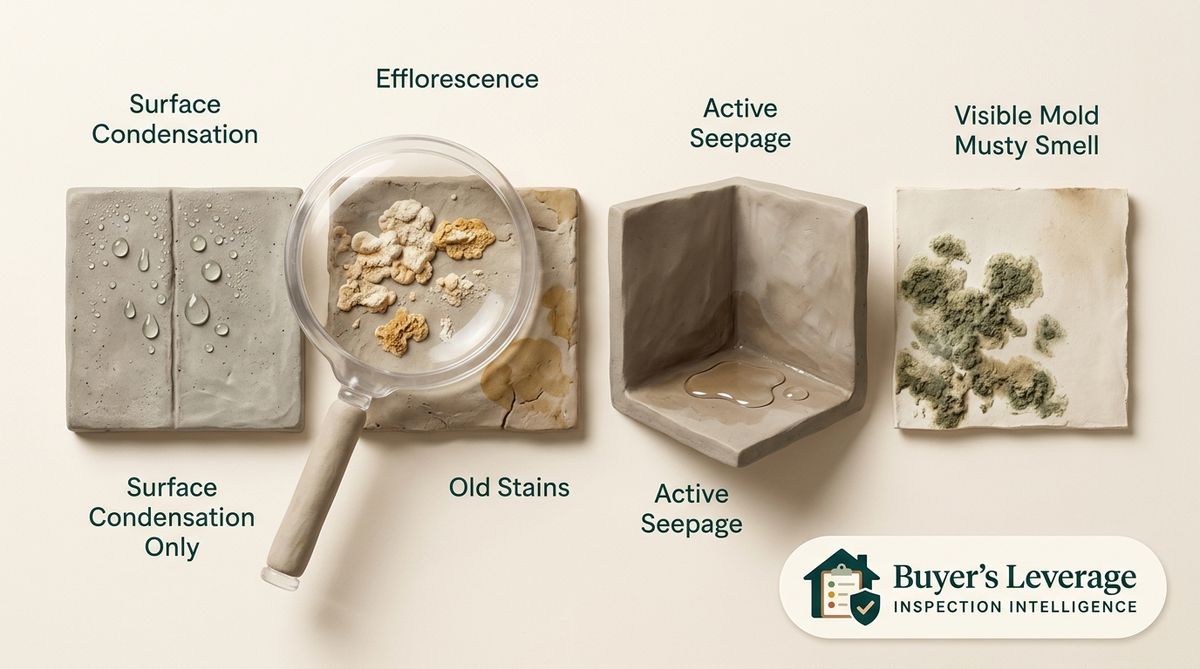
You just opened your inspection report and saw 'moisture staining' or 'efflorescence' in the basement. Take a breath — not all water signs mean active flooding, and not all moisture problems cost the same to fix.
What Your Inspector Is Actually Looking For
Your home inspector walks the basement looking for clues — not just puddles, but signs that water has been there or might come back. They're checking walls, floors, the base of columns, around windows, and near utility penetrations.
They're looking for discoloration, mineral deposits, peeling paint, rust on metal, and soft or warped wood. Each of these tells a story about whether water is active now, was there once, or might show up later.
Your report might note these things without calling them emergencies. That's normal. The goal is to document what's there so you can figure out if it's a dealbreaker, a repair item, or something to monitor.
Old Stains vs. Active Moisture: How to Tell the Difference
A brown water stain on a concrete wall might be five years old, dry to the touch, and not growing. That's an old stain — it tells you water was there once, but doesn't mean it's happening today.
Active moisture feels damp, shows up on a moisture meter, or appears fresh (darker, spreading, or accompanied by mold). Efflorescence — those white chalky deposits — can mean water is moving through the concrete right now, evaporating, and leaving minerals behind.
Your inspector will often note both in the same report. The old stain gives context. The active moisture tells you what needs fixing soon. If you're not sure which is which, ask your inspector to walk you through photos or revisit during the walkthrough.
Efflorescence: What Those White Stains Mean
Efflorescence looks like white powder or crusty buildup on concrete or brick. It happens when water moves through masonry, dissolves salts, and evaporates on the surface.
The presence of efflorescence doesn't often mean you have a leak today — it can linger for months after the moisture event. But it does confirm that water moved through that wall at some point.
If the efflorescence is dusty and brushes off easily, it's likely old. If it's accompanied by damp concrete, dark staining, or a musty smell, water is probably still moving through. That's when you want a waterproofing specialist to trace the source.
Where Basement Water Comes From
Basement moisture can enter from five main sources: surface water (grading and gutters), groundwater (rising water table or hydrostatic pressure), foundation cracks, plumbing leaks, or condensation.
Surface water is the most common and often the easiest to fix — regrading soil away from the foundation, extending downspouts, or adding a french drain can solve it. Groundwater and hydrostatic pressure are harder and may need interior or exterior drainage systems.
Foundation cracks let water in during heavy rain. Plumbing leaks are rarer but show up near water heaters, supply lines, or floor drains. Condensation happens in humid climates and usually shows up on cold pipes or uninsulated walls. Your inspector's notes about where the moisture appears help narrow down the source.
Grading and Gutters: The First Thing to Check
Most basement water problems start above ground. If soil slopes toward your foundation, or if gutters dump water next to the house, that water has nowhere to go but down.
Your inspector will note 'negative grading' or 'reverse slope' if the ground tilts the wrong way. They'll also flag missing or clogged gutters, disconnected downspouts, or downspouts that empty too close to the foundation.
These are usually straightforward fixes. Regrading might cost a few hundred dollars for minor adjustments or a few thousand for major reshaping. Extending downspouts or adding splash blocks can be under $100. If your report flags grading or gutter issues alongside basement moisture, start there — it's often the root cause.
Foundation Cracks and Wall Leaks
Not all foundation cracks leak, but cracks that run horizontally, widen at one end, or show water staining do. Your inspector will note the orientation, width (often measured in fractions of an inch), and whether there's efflorescence or moisture nearby.
Vertical cracks are common in poured concrete and often just settlement. Horizontal or stair-step cracks in block walls can signal lateral pressure from soil or water. If water is coming through the crack, the fix usually involves sealing from the inside or excavating and sealing from the outside.
A structural engineer can tell you if the crack is moving or stable. A waterproofing contractor can tell you the best way to stop water. Both evaluations are worth having before you make a repair decision.
Window Wells and Basement Windows
Basement window wells collect leaves, snow, and rain. If the well doesn't have a drain or the drain is clogged, water backs up and leaks in around the window frame.
Your inspector might note 'standing water in window well' or 'water staining below window'. This is fixable — clean the well, add or clear the drain, and re-caulk the window if needed.
Window-well covers help keep debris out. If your report flags multiple window wells with water, that's a pattern worth addressing before closing. It's usually a few hundred dollars per window to fix properly.
Interior Drainage Systems and Sump Pumps
Some basements have interior drainage systems — a perimeter drain that collects water and routes it to a sump pump. If your home has one, your inspector will note whether the pump works, whether it has a backup, and whether the discharge line drains away from the foundation.
If the basement shows moisture and there's no sump, adding one may be recommended. Interior drainage (sometimes called a 'french drain' or 'weeping tile') is a common solution when exterior fixes aren't enough.
A typical interior perimeter drain system with sump pump runs $3,000–$8,000 depending on basement size and access. If the report notes 'no sump pump' alongside active moisture, that context helps frame a negotiation or a repair budget.
Mold, Mildew, and Musty Smells
Where there's moisture, there's often mold or mildew. Your inspector might note 'microbial growth', 'mold-like substance', or 'musty odor'. Most inspectors aren't mold experts and won't identify species, but they'll document what they see.
Surface mold on concrete or exposed joists can often be cleaned if you fix the moisture source. But if mold is widespread, or if it's behind walls, a mold specialist should test and scope it.
Mold remediation costs vary wildly — from a few hundred for cleaning to several thousand for containment, removal, and re-finishing. The key is stopping the water first. Cleaning mold without fixing the leak just sets you up to clean again.
Plumbing Leaks vs. Foundation Leaks
Not all basement water comes from outside. A slow leak from a water heater, a pinhole in a supply line, or a cracked waste pipe can cause staining or puddles that look like foundation leaks.
Your inspector will note the location — if moisture is near plumbing fixtures, under a water heater, or along a drain line, suspect plumbing first. If it's along an exterior wall or in a corner, suspect foundation or grading.
A plumber can pressure-test lines or run a camera through drains. A waterproofing contractor can do a water test on the foundation. Knowing the source determines who you call and what the fix costs.
Who to Call for What
If your inspection shows basement moisture, the next step depends on the source. Grading and gutter problems? Start with a landscaper or handyman. Foundation cracks or wall leaks? Call a waterproofing specialist or structural engineer. Plumbing suspect? Call a licensed plumber.
Many buyers get two opinions — one from a waterproofing contractor and one from a structural engineer if cracks are noted. The contractor will usually offer a free assessment and quote. The engineer charges a fee but gives you an unbiased opinion on whether the foundation is stable.
If your report notes multiple moisture sources — say, grading and a crack and a missing sump — you might need more than one trade. Your agent can help coordinate.
How to Use This Information During Your Inspection Period
Your inspection period is your window to investigate, get bids, and decide what to do. If the report shows basement moisture, don't wait until day nine of a ten-day period to call someone.
Get a specialist out within a day or two. Ask for a written assessment and a ballpark repair cost. Share that with your agent. Together, you'll decide whether to ask the seller to fix it, ask for a credit, walk away, or accept it and plan to fix it yourself.
Not all moisture findings kill deals. But the ones that do are usually the ones buyers didn't investigate until it was too late to negotiate. Use your time. Ask questions. Get the information you need to make a calm, informed decision.
Real-world scenario
You open your inspection report and see 'efflorescence and water staining on northeast foundation wall.' You text your agent. She recommends calling a local waterproofing company and a structural engineer. Both come out within 48 hours. The engineer says the foundation is stable. The waterproofing contractor traces the issue to a downspout that dumps next to the house and a low spot in the grading. He estimates $1,800 to regrade and extend the downspout. You and your agent send that scope to the seller and ask for a $1,500 credit. The seller counters at $1,000. You accept, close on time, and hire the contractor the week after you move in.
Basement Water Intrusion Concern Checker
Answer a few questions about what your inspector found to gauge next steps
Have an actual inspection report?
Upload it and receive a report-specific analysis with prioritized concerns, repair exposure planning, and negotiation guidance.
- water intrusion in a home inspectionProvides an overview of water intrusion issues during inspections
- foundation cracks found in inspectionExplains foundation issues often related to basement water intrusion
- home inspection repair costsHelps estimate potential repair expenses from water intrusion damage
- what to negotiate after a home inspectionGuides buyers on negotiating repairs related to inspection findings
- water intrusion risk checkerAssesses risk levels for water intrusion in homes
- foundation concern checkerEvaluates foundation issues connected to basement water problems
- sample home inspection reportShows an example report that may include water intrusion findings
- negotiation letter builderHelps create negotiation letters for inspection repair requests
Frequently asked
What does 'evidence of moisture intrusion' mean in a basement inspection report?+
It means your inspector saw signs water has gotten in — staining on walls or floors, efflorescence (white mineral deposits), rust on metal, warped wood, or a musty smell. It doesn't often mean active flooding, but it tells you the basement isn't staying dry all the time.
Should I walk away from a house with basement water issues?+
Not necessarily. A lot depends on the cause and severity. Minor seepage from poor grading is usually fixable for a few thousand dollars. Structural cracks or high water tables are more involved. Talk with your agent and consider getting a waterproofing specialist to scope it before you decide.
How much does it cost to fix basement water intrusion?+
Simple fixes like regrading, extending downspouts, or sealing minor cracks can run $500 to $3,000. Interior drainage systems or exterior waterproofing often cost $5,000 to $15,000 or more. Get a couple of quotes from licensed waterproofing contractors — your inspection report isn't a bid.
Can I use basement moisture findings to negotiate the purchase price?+
You can ask. Whether the seller will agree depends on the market, the home's condition overall, and how the issue compares to others in the area. Work with your agent to frame the request — a repair credit or price reduction are common approaches.
What's the difference between a wet basement and a damp basement?+
A wet basement has standing water or active leaks. A damp basement shows signs of past moisture — stains, mild odor, elevated humidity — but no water when you're there. Both matter, but damp basements are often easier and cheaper to address.
Do I need a specialist to evaluate basement water problems?+
Often, yes. Your home inspector flags the signs, but a waterproofing contractor or structural engineer can pinpoint the source, explain your options, and give you repair costs. That helps you make a clear decision before closing.
Will basement moisture often show up during a home inspection?+
Not often. Inspectors visit on one day, in one season. If it hasn't rained recently or the ground is frozen, active leaks might not be visible. That's why staining, efflorescence, and other old clues matter — they tell the story over time.
Is basement water intrusion covered by homeowners insurance?+
Usually not. Standard policies typically exclude groundwater seepage and flooding. Some cover sudden pipe bursts or sewer backups, but chronic moisture from outside usually falls on you. Check your policy and ask your agent if you're unsure.
Buyer's Leverage provides decision-support information, not legal, engineering, inspection, contractor, lender, insurance, or financial advice. Repair exposure ranges are planning estimates, not bids.